Resources & Networking for TOCs

Today was the first in a series of sessions organized for the benefit of VSB TOCs.

Teachers networked, shared the best & most challenging experiences of past month, began building a TOC Survival Kit, and received information about a variety of resources that can assist them in day-to-day TOC work.

The overall feedback from the session indicated that the teachers wanted more opportunity to share their challenging experiences and to discuss strategies for dealing with them.

Presentation

Resources (note: additional links on the right under the tag cloud)


Posted in Uncategorized | Tagged , , , , | Leave a comment

Accommodating in Science

This week I had the privilege of sharing with the Gladstone Science Department a framework (and evidence that supports it) that allows for all students to experience more success in science keeping in mind that change should be manageable.

In practice, any accommodations that we make end up benefiting all our students, not just those at the margins.

Continue reading

Posted in Uncategorized | Tagged , , , , , , | Leave a comment

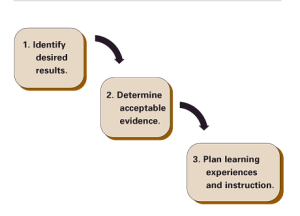
Understanding by Design

My #1 recommended read for any teacher.

Read the first chapter for free here.

You can read about the impact it had on me here.

Backward Design Graphic

Backward Design (Wiggins & McTighe)

Posted in Uncategorized | Tagged , , , , , | 3 Comments

A Teacher’s Plea

This just arrived in my Inbox from an elementary teacher in Vancouver.  Someone I respect for her love of children and her passion for teaching.  She is a master teacher and makes magic happen on a daily basis.  This is her teacher blog and below is her letter to the people of Vancouver.  After I read it I had to stop what I was doing share it.  (Note:  Carrie has posted more about her school on her classroom blog).

It will be Thanksgiving in a few weeks.  Time to reflect on what we are thankful for: our families, our health, our people, and our experiences.

In my classroom each week we pass a gratitude stone and students share what they are grateful for.  Sometimes answers are unexpected but certain things come up again and again.  “I am grateful for my teacher.” “I am grateful I go to school.” “I am grateful for my friends.” “ . . for my family” “. . . that I have a house.” etc. Nothing unusual it seems.  Personally, I find myself grateful each time for a group of children that emphasize these important things they value and never mention material items.  It says something.  Definitely it speaks to our discussions and studies at school.  It speaks to their families and experiences.  It also reflects their place in the world.  My students live in the inner city.  They don’t have a lot.  Some are grateful for a house because last year they were homeless. Some value school because it is the place of comfort – of daily breakfast, of hot lunch, of abundant books, adults who care and if they are lucky, clothes and toys passed on when they need them.

We are an amazing community at my school.  We try to meet every need we can.  We have some incredible partners in the community that contribute in countless ways to enrich the lives of our students.  I would hate to start a list for fear of leaving someone off it, so I will show my appreciation in this way.  Through time, through music, through holiday hampers, through books, through performances, through mentorship, through tutoring, through food, through so much more, many individuals, organizations, and businesses contribute.  I am endlessly in awe of the generosity and in no way want to take away from it, but I have to say it is not enough.  I have worked in this community for 16 years. It is not enough.

I am a teacher and I am passionate about learning. In my classroom learning happens.  It is celebrated.  It is valued.  But needing happens too.  Often when a child is upset I ask this question:  “What do you need?”  When I assume, I can be wrong.  When I ask, I am often surprised at the answers I get.  Asking and listening allows me to know where to start.

Nobody ever asks me what I need.  But here is my answer.  In these first few weeks of school this year, this is what I have needed:

  • Snacks. Recess snacks. Snacks for children who arrived late and missed breakfast. We have had donations and thank goodness. But I have many hungry kids and the stash in my file cabinet won’t last.
  • Socks. Warm, dry and the proper size. I have many sockless kids. The rains are coming. This just isn’t okay.
  • Boy’s shoes size 3 or 4 because a pair that come to my class every day have holes. Girls size 13 – 2 because more than a few of us need them.
  • A counselor for my cloakroom. Because we have had tears in there and we are working through stuff but in the middle of math it is hard to address sadness that just overwhelms you suddenly. Overwhelms you at age seven or eight. Our school has one counselor that comes for part of one day each week. She is there less than 4 days a month. She serves a school that is situated in the downtown eastside. We are not about a student number = counselor time ratio. We have bigger needs. Plain and simple.
  • Advocates. Lots of them. Because some of us have ministry designations that are supposed to bring “in class” support and this support has been cut. Again.
  • Affordable, safe housing. Some of us don’t go home to a home but to a shelter or a relative’s couch.

My list isn’t finished, but I’ll end it here. I think you get the idea.

True, not all of us have these needs.  But some of us do and that’s the problem.

What do I think?  I think we have to all think seriously about how we feel about the fact that our child may go to school everyday with a packed lunch, a warm jacket and few worries and other children in this city do not. They come to my school and other schools across the city hungry, stressed and cold.  In Vancouver.  Where you live.

Think about what you vote for, speak for, and speak up against. Are you willing to put your time and/or your money towards affecting change? Will you advocate for a child that is not your own?

What are your ideas?  What can you do?  When?

We will not say no to another box of clothes or toys or granola bars because yes, we can use them.  But understand we have a very important job – teaching these children in front of us each day.  Personally, I am exhausted by the other things I do – coordinating, organizing, distributing to try and stay just 3 steps behind the need (I am never ahead) and not let it run away from me completely.  If you can help, also give some thought to how that helping will look.  Play it out to the end.  Own it.  Take it on.  It is so important.

Because from where I sit everyday, things are not okay.  I can teach these children.  Love them.  Advocate for them.  Find them clothes.  Stock my room with great books.  Give away parts of my lunch.  Find donations.  Find volunteers.  I can be there everyday.  Be reliable.  I can connect.  I can build community partnerships.  I can build relationships with families.  I can watch others around me doing the same.  But until I know you are helping too – it will remain not good enough.

When you think about all those things you are grateful for, please get inspired.  To be caring.  To be generous.  To make change.  Because every child in Vancouver matters.

Carrie Gelson Grade 2/3 Teacher

Note: the focus of this blog is the support of teachers in their practice.  My intent in posting Carrie’s letter was to give teachers (particularly newer teachers) some perspective on the challenges that we collectively face in the classroom.

If you wish to make a comment on this letter you can go here.

Posted in Uncategorized | Tagged , | 15 Comments

Anne Davie’s Resources

This July we were very fortunate to have Anne Davies in Vancouver for a two-day session on “Leading the Way to Making Classroom Assessment Work”.

Staff are invited to access some of Anne’s video clips and other valuable resources by registering on the free membership site. You will need to create a user name and password to access the protected content but membership is free. You are free to share this resource with your colleagues.

http://www.justintimeafl.com/

You will also find the free conversation notes and Blackline Masters found in all of the book resources in PDF printable format on this website.

 http://connect2learning.com/store/cp/

You may also wish to sign up to Anne’s FREE bi-weekly e-Newsletter. Anne shares some of her video clips, articles and thoughts and will keep you informed of the latest trends and studies related to classroom assessment. Simply click on the link below (or copy and paste the following web address into your web browser’s address bar) to find the sign up page.

http://www.annedavies.com/assessment_for_learning_ezine.html

Posted in Uncategorized | Tagged , | Leave a comment

From Bums to Gums – Pro D Videos for Science Teachers

Pro D videos for teachers from Teacher TV in the UK:
Check out “Bums to Gums” — second segment of this video
Engaging biology activities which require simple equipment.
Demonstrations of chemical reactions to enthuse your students.
Explanations with beautiful images of the sun and other stars.
Posted in Uncategorized | Tagged , , , , , , , , , , , , , | Leave a comment

Key Questions for Learner Engagement

Question#0: Can you name two adults in this school who believe you will be a success in life?

Question #1: What are you learning? Where are you going with your learning?

Question #2: How is it (your learning) going? 

Question #3: Where to next?

Building on the “Three Questions” from Hattie & Timperley, Judy Halbert & Linda Kaser give guidelines on using the questions to assess and build learner engagement.

Key Questions for Learner Engagement – Halbert & Kaser

Posted in Uncategorized | Tagged , , , , | Leave a comment

Change Should Be Manageable

The following two statements have proven to be very helpful to me whenever I consider making a permanent change in my practice.

“Good for students.  Manageable for teachers.”
Damien Cooper

If the change adds to my overall workload then it is not sustainable.  The change can move the work to the front but overall the amount of work needs to stay the same or drop.  Recent changes in my teaching practice have involved a lot of front-loading but the overall amount of work has dropped and the nature of the work has become more enjoyable.  Plus, the changes have been positive for my students.  Note: whenever you are doing something new for the first time you should expect it is going to be more work.  Personally, the more front-loading I do the first time, the more manageable the overall work AND when I have worked with a partner, the more manageable the overall work.

If you are going to start doing something new, you need to stop doing something old.”
Faye Brownlie

The danger is that we keep adding things to our plates and evidently we are doing way too much and feeling overwhelmed.  I immediately think about reality TV shows where people are awash in cluttered homes because things come into the home but nothing leaves it.  Faye’s statement is reminder that there is a finite amount of time in each day and we have a finite amount of energy to give each day.  If I am going to add something to my classroom/lesson/unit then something has to go.

Note: In my experience, in some cases it is not so much something new displacing something old, but rather something old being done in a new way.  The changes can be subtle but the effect dramatic.

Example: Writing in Science — Lab Reports

A few years back, feeling overwhelmed with marking, I thought I might have students mark each others’ lab reports.  Shudder!  My first foray in the world of peer & self assessment:(

  • Evaluating/judging each other’s work (not good).
  • Assessing each others’ work and giving descriptive feedback which the students takes and uses to improve their work (good).

Aside:

  • peer & self assessment = good
  • peer & self evaluation = not so good

I realized students needed some criteria so as a class we brainstormed the criteria for a good lab report and I recorded it on the board.  Students found a partner who exchanged reports with them for marking.  After the marking they returned them and had and defend the mark they gave it.  Another shudder!  The defense of the the mark was good because it gave descriptive feedback to their peer but the assigning of the mark was inappropriate because of its evaluative/judgmental nature and in some cases blocked the transmission of the feedback plus students should never grade each others’ work.  (assess yes, evaluate no).

BUT, even when done poorly (which is how I did it the first time) the overall effect was that quality of the next lab report (which I collected and I graded) went up dramatically.

Was there more front-loading work for me to do?  YES both in my professional learning about AfL and in the process I used in my classroom to help my students become better able to ASSESS their work and the work of their peers!

Was the GRADING of the next set of labs (handed in once they had incorporated feedback from their peers) less work for me? Absolutely.  They were much better written and much more pleasurable to read.

Did my students learning improve?  Yes.  By Christmas they were writing the quality of lab reports that I used to only see by June.

Disclaimer: in the years since this experience I have made many changes in the way in which I teach science and the ways in which students monitor and demonstrated their learning.  I still have students write lab reports but we tend to do more labs & less formal reports.

Posted in Uncategorized | Tagged , , , , , | 6 Comments

Events for New VSB Teachers

The following events are coming up in the next two weeks for new Vancouver teachers.

  1. VSTA New Teachers Induction – Wed Sept 28th
  2. Resources and Networking for TOCs – Wed Oct 5th
More to come…
Posted in Uncategorized | Tagged , | Leave a comment

Staying Current – The Importance of Ongoing Professional Learning

Do you know what this is?

If you are an optometrist you should.

If you are examining the eyes of a 70 year old man whose vision has been worsening for the past 10 years,

you should know what it is.

You should recognize a cataract when you see one and know that it is treatable.

Treated not by changing the lenses of your patient’s eyeglasses

but by replacing the lenses in your patient’s eyes.

Intraocular Lenses Insertion

Fortunately for the man in question his optometrist retired and he acquired a new optometrist.

One that knew about the latest research and practices.

(N.B. For the sake of future patients, I hope the new optometrist remains current).

.

There are things that teachers do that are, and always have been good practice.

Education research and brain research show that many of our past practices are good.

But the research also shows that there are somethings we should stop doing

and

there are somethings we should start doing.

And to know the difference we have to stay current.

Otherwise we are in danger of malpractice.

Posted in Uncategorized | Tagged , , , , | Leave a comment